
Star Realms
Wise Wizard GamesCard
4.63.08K Reviews
- Version
- 20260814.1.2
- Installs
- 500.00K
- Age Rating
- Everyone
Screenshots


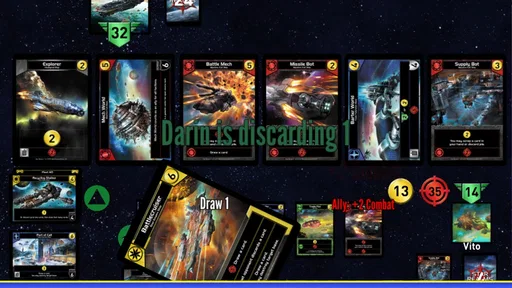
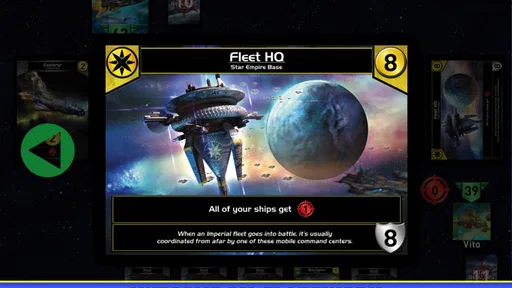
Our Review of Star Realms
 Analysis by Appyee
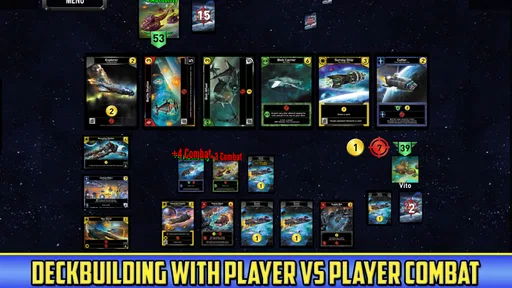
I first came to Star Realms expecting a quick card game, but I stayed because its decisions are much sharper than its simple presentation suggests. This is a free digital deck-building game from Wise Wizard Games, built around direct player-versus-player space combat. You begin with a small, unimpressive deck, buy better cards from a shared market, and try to turn those purchases into enough damage to break through your opponent’s authority.
That basic loop is easy to understand, yet it creates the kind of tension I usually associate with a much more complicated tabletop game. Every purchase changes the shape of your future turns. A card that looks powerful on its own may be awkward if it does not fit your current faction mix, while a modest card can become excellent when it supports the rest of your deck. I like that the game rarely lets me play on autopilot for long.
How the current game feels in everyday play
The strongest part of the experience is its pace. A match can fit into a short break, but the game still gives me meaningful choices instead of reducing each turn to “play everything and attack.” I have to decide whether to spend trade on a new card, remove a weak starter from my deck, preserve combat for a later target, or use an ability immediately because the market may change before my next turn.
That makes it a good companion for small, repeatable sessions. I can play while waiting for an appointment or during a quiet commute, provided I have enough attention to follow the board. It is not a background game that I can casually tap through while watching something else. Missing a faction bonus or buying the wrong card can leave consequences several turns later.
The learning curve is friendly at the beginning because the card effects are direct and the objective is obvious: reduce the other player’s authority before they reduce yours. The deeper challenge comes from recognizing tempo. Sometimes buying the strongest-looking card is less useful than taking a cheaper card that keeps your deck moving. Other times, removing a starter card is more valuable than adding another flashy option because a leaner deck reaches its important cards more often.
I found the shared trade row especially important. It prevents me from following one fixed opening every time, since the available cards influence what is sensible. If I force a preferred faction when the market does not support it, I usually end up with a clumsy deck. The better habit is to read what is available, notice which cards work together, and accept that a flexible plan can beat a perfect-looking one.
The factions reward planning rather than collection size
The faction structure gives the game its personality. Cards from the same faction can work together, but committing too heavily can also make a deck predictable or leave me waiting for the right combination. I enjoy the tension between specialization and flexibility: concentrating on a theme can produce explosive turns, while mixing factions can give more reliable access to useful effects.
A practical tip is to treat faction bonuses as a reason to value sequencing, not as an automatic command to buy every card with the same symbol. I often get better results by taking a card that improves my deck’s consistency, then using faction-heavy turns when the opportunity naturally appears. This is one of the less obvious lessons for new players, because the visible bonus can tempt you into purchases that look synergistic but dilute your actual plan.
Another useful habit is to watch the opponent’s discard pile and played cards instead of focusing only on their current authority. Their recent purchases reveal whether they are building toward a burst of combat, trying to gain control through bases, or simply improving their economy. That information affects my priorities. If I see a strategy forming around a vulnerable card type, I may value immediate pressure more than another long-term purchase.
Bases change the meaning of “attack now”
Persistent bases are one of the reasons matches do not feel like simple races to produce the largest damage number. A base can remain in play and continue shaping future turns, so the question is not merely whether I can deal damage. I also have to ask whether leaving that base alive will make the next few turns much worse.
This creates a useful trade-off. Attacking a base can consume combat that might otherwise reduce the opponent’s authority, but ignoring it may allow the opponent to build a safer position. I have learned to judge bases by their future impact rather than their current appearance. A small defensive obstacle can be worth removing if it protects a larger plan, while a less threatening base may be better left alone when racing is more important.
That decision-making gives the game more texture than many lightweight mobile card games. It also means the app is not ideal for people who want every match to be solved by one obvious priority. The board state matters, and the correct answer can change from one turn to the next.
What the mobile version does well, and where it asks for patience
As a mobile adaptation, Star Realms benefits from a compact ruleset and a card layout that suits touch screens. The game’s central actions are easy to understand once I have played a few turns, and the short-match structure makes it more practical on a phone than a long strategy title that demands an uninterrupted evening.
The free entry point is helpful. I can try the core experience without paying first, which makes it easier to decide whether the deck-building style suits me. The game is rated Everyone, so it is approachable for a broad audience, although younger players may still need time to understand why a weaker-looking purchase can be strategically correct.
There are in-app purchases ranging from $0.99 to $119.99 per item. That is worth considering before committing to the wider experience. I would approach the purchase system carefully rather than assuming that every available addition is necessary. The best way to evaluate the game is to spend time with the free portion, decide whether I enjoy repeated deck construction, and only then consider optional content.
The game has been available since July 3, 2014, and its age is both a strength and a limitation. The long-running design has had time to establish a clear identity, but it does not feel like a brand-new mobile game built around constant novelty. I play it for the quality of its decisions, not because every session promises a dramatically different presentation.
The current version is 20260814.1.2, while the minimum operating-system requirement is Android 7.1. That places the game within reach of many older Android devices. Still, compatibility on paper is not the same as comfort in practice. On a smaller or slower phone, card text and touch accuracy matter more than raw visual detail, so I would keep the device’s screen condition and performance in mind before choosing it for serious play.
How the game has evolved without losing its core
The version information shows that the app continues to receive updates rather than remaining frozen as an old release. I see that as a positive sign for maintenance, but I would separate that evidence from assumptions about what future updates will bring. A current version tells me the product is still being maintained; it does not promise a particular new mode, card set, interface redesign, or balance change.
For existing players, that distinction matters. If I already enjoy Star Realms, a maintained app is reassuring because it suggests the digital version remains relevant. However, I would not return after a long absence expecting the entire game to have been transformed. The lasting appeal still comes from the same compact loop: buy cards, improve the deck, manage combat, and respond to the opponent’s plan.
For a new player, the older release history can actually be useful. It means the game has a recognizable foundation rather than feeling like an experiment that may disappear after a few weeks. At the same time, someone seeking the newest visual style or the most elaborate onboarding may find the presentation more functional than luxurious.
The audience response is encouraging: the game holds a 4.6 average from around 29 thousand ratings, with roughly 3.1 thousand written reviews and over 500 thousand installs. Those figures do not replace personal testing, but they fit my impression that the game has found a durable audience among people who enjoy competitive deck-building rather than only casual card tapping.
Small decisions that improve a new player’s results
My first recommendation is to resist buying cards simply because they are stronger than the cards already in the starter deck. A deck is not improved by power in isolation. It is improved when the new card appears often enough, supports the rest of the deck, and helps me reach a useful turn more consistently. In practical terms, I would rather make a coherent purchase than fill the deck with unrelated high-cost cards.
Second, I would pay attention to deck thinning whenever the game gives me a sensible opportunity. Starter cards are useful at the beginning but become less impressive as stronger cards enter the deck. Removing one weak card can make future draws more reliable, particularly when I am trying to assemble a faction combination. This is easy to overlook because removing a card feels less exciting than buying one, yet it can have a larger effect over several turns.
Third, I would avoid spending every point of combat automatically. If the opponent has a base that will remain troublesome, attacking it may be the correct use of the turn. If their board is harmless and their authority is low, direct damage may be better. I try to think one turn ahead: what will the opponent be able to do if I leave this target untouched?
Finally, I would use losses as information rather than immediately blaming luck. The market introduces uncertainty, but repeated defeats often reveal a pattern in my decisions. Perhaps I am buying too many expensive cards, ignoring economy, attacking bases at the wrong moment, or committing to a faction before the market supports it. The game becomes much more rewarding once I review the sequence of choices instead of judging only the final score.
Who should play it, and who may prefer another card game
I would recommend Star Realms to someone who wants competitive strategy in short sessions and enjoys improving through repetition. It is especially suitable for players who like card games where the deck changes during the match, because each purchase is both a tactical action and a long-term investment. People who enjoy analyzing probabilities, identifying synergies, and adapting to an opponent will find more depth here than the simple interface first suggests.
It is also a good choice for a tabletop card-game fan who wants a portable version of a familiar style. The app handles the bookkeeping that can slow down a physical match, while the digital format makes it easier to play without setting up a table. I appreciate that convenience when I want a focused game but do not have the space or time for a larger physical session.
I would skip it if I want a purely relaxing solitaire experience, a story-driven campaign, or a card game where collecting a large library is the main attraction. The heart of this app is competition and decision-making. Even when a match is short, losing because of a poor purchase or a missed threat can feel demanding rather than soothing.
Compared with a traditional collectible card game, Star Realms is less dependent on arriving with a carefully assembled personal deck. The shared market means I build during the match, so adaptation matters more than memorizing one collection. Compared with a simple match-three or casino-style card game, it offers much more control but also asks for more concentration. A player who wants immediate, low-thought entertainment may be happier with a faster casual alternative.
There is also a trade-off against larger digital strategy card games. Those games may offer more elaborate progression, broader presentation, or a stronger sense of long-term collection. Star Realms answers with speed and clarity. I can focus on the match itself without needing to manage a sprawling account, but I may miss the spectacle and variety of a more expansive competitor.
What I would watch before committing further
If I were deciding whether to make this a regular game, I would watch three things in my own experience. First, do I enjoy the basic market decisions after the novelty wears off? The game’s value comes from replaying that loop, so liking the first few matches is not enough if repeated deck construction quickly feels routine.
Second, I would pay attention to how the current version behaves on my particular device. The minimum requirement is broad, but a comfortable card game needs readable text, dependable touch input, and smooth enough transitions that the interface does not become part of the challenge. These are practical concerns, especially for anyone using an older phone.
Third, I would decide whether the available free experience already gives me enough satisfaction. Because optional purchases can reach a high price for an individual item, I would not buy impulsively just to solve a losing streak. A purchase should expand an experience I already enjoy, not compensate for a strategy that I have not yet learned.
My final impression is positive but specific. Star Realms is not valuable because it is the newest card game or because it overwhelms the screen with content. I recommend it because its compact battles make every purchase matter, and because the shared market keeps me responding instead of repeating one script. The free starting point makes it easy to test, the Everyone rating keeps the entry approachable, and Wise Wizard Games has continued to maintain the app.
The best reason to try it is the quality of its small decisions. If you enjoy turning a weak opening deck into a focused machine while watching an opponent do the same, this remains an excellent mobile fit. If you want a passive, story-heavy, or collection-first game, I would look elsewhere. For me, it works best as a short but serious strategy session: easy to start, difficult to master, and rewarding when a carefully planned deck finally comes together.
Verdict
Strengths of Star Realms
- Fast matches make it easy to play during short breaks.
- Deck-building choices feel meaningful without being overly complicated.
- Faction combos reward planning and smart card purchases.
- Works well for both casual games and competitive strategy fans.
- The sci-fi theme gives cards and battles a distinctive personality.
Limitations of Star Realms
- Some powerful cards can make matches feel unbalanced or luck-driven.
- The interface may feel cramped on smaller phone screens.
- Online matchmaking quality can vary depending on the player pool.
- Many features and expansions may require additional purchases.
- New players may need time to learn card interactions and strategies.
Similar Picks in This Category
View All
Solitaire - Classic Card Games
MobilityWare4.6

UNO!™
Mattel163 Limited4.3

Spider Solitaire: Card Games
MobilityWare4.6

Solitaire.com - Classic Cards
Tripledot Studios Limited4.7

Plants vs. Zombies™ Heroes
ELECTRONIC ARTS4.1

Hearthstone
Blizzard Entertainment, Inc.4.1
Frequently Asked Questions
What is Star Realms?
Star Realms is a fast-paced digital deck-building card game based on the popular tabletop game. You build a fleet by purchasing ships and bases, then use them to attack your opponent and reduce their authority to zero. Matches are usually short, but every purchase matters because your deck must balance combat strength, trade resources, and useful card combinations.
Can I play Star Realms offline?
Star Realms includes solo content that can generally be enjoyed without competing against another human player, although some features may require an internet connection. Online multiplayer, account services, rankings, purchases, and synchronization depend on connectivity. If you mainly want offline play, check the current store description and test the available campaign or AI modes after installation.
Does Star Realms support multiplayer?
Yes, Star Realms is designed for competitive play and offers multiplayer options, including matches against other players depending on the version and available services. The game also provides artificial-intelligence opponents for practice and solo sessions. Multiplayer rules, matchmaking, expansions, and account requirements can vary between platforms, so review the in-game options before committing to online play.
Is Star Realms free to download and play?
Star Realms can be downloaded on supported mobile devices, but the exact business model may differ by platform, edition, or region. Some content may be available immediately while additional campaigns, factions, cards, or modes can require in-app purchases. Before downloading, check the store listing for current pricing, optional purchases, advertisements, and whether an account is needed.
Is Star Realms suitable for beginners?
Star Realms is approachable for beginners because its basic objective is easy to understand: buy cards, improve your deck, and defeat the opposing fleet. However, the game becomes strategically demanding as you learn faction synergies, card timing, authority management, and deck efficiency. New players should begin with tutorials or AI matches before entering competitive multiplayer.
Play our best games!


